
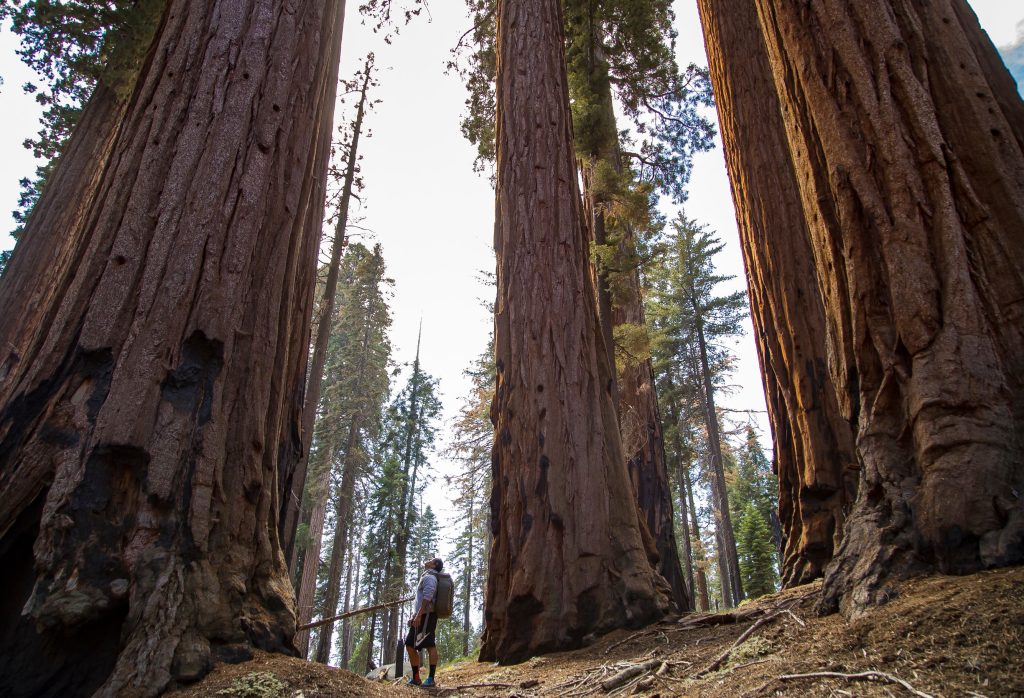
Recently, my family and I visited Sequoia National Park. Looking at those giant trees reminded me of Jesus’ Parable of the Sower in Mark 4, good soil represents a heart that hears God’s Word, accepts it, and allows it to produce fruit, fruit much bigger than the seed. Standing at the base of a giant sequoia is almost impossible to describe. You look up, and the tree seems to disappear into the sky. Some giant sequoias grow more than 250 feet tall and can live for thousands of years. General Sherman, the largest tree in the world by volume, stands about 275 feet tall and measures more than 100 feet around at its base.
And yet every one of those enormous trees began with something incredibly small. A giant sequoia seed is about the size of a flake of oatmeal. That contrast is amazing. Something small enough to rest on the tip of your finger contains the potential to become something so large that you cannot take it all in while standing underneath it. But not every sequoia seed becomes a sequoia tree.
The seed may contain enormous potential, but it still needs somewhere to land. It needs moisture, sunlight, and access to healthy soil. The condition of the soil determines whether the life inside the seed ever has an opportunity to emerge. Jesus used this same picture to teach us something important about our spiritual lives.
The Parable of the Sower: Good Soil
In Mark 4, Jesus tells the story of a farmer scattering seed. Some seed falls on a hardened path and is eaten by birds. Some falls on shallow, rocky soil. It begins growing quickly but cannot develop deep roots and dies when conditions become difficult. Some seed falls among thorns. It grows, but eventually the surrounding weeds choke it out. Then there is another kind of soil.
Still other seeds fell on fertile soil, and they sprouted, grew, and produced a crop that was thirty, sixty, and even a hundred times as much as had been planted!”
-Mark 4:8
Later, Jesus explains that the seed represents the Word of God, while the different soils represent the condition of the hearts receiving it. The most important question in this parable may not be, “What kind of seed is being planted?” It may be: “What kind of soil is my heart?”
1. The Seed Is Not the Problem
There is one constant throughout Jesus’ story. The seed. Every type of soil receives the same seed. The farmer does not use better seed for the good soil and inferior seed for the hardened or rocky ground. The seed stays the same. The difference is the soil receiving it. That can be uncomfortable because we naturally prefer to blame something outside ourselves when we are not growing. We say things like:
- “I’m just not being fed.”
- “I don’t connect with that teaching style.”
- “That kind of worship isn’t for me.”
- “I don’t learn through small groups.”
- “If the church did things differently, I would probably grow more.”
Of course, churches should teach Scripture faithfully and communicate it well. There are certainly unhealthy churches and unhealthy teaching environments. But there is another question we have to be willing to ask:
Is the problem always the seed, or could something be happening in the soil of my heart?
Years ago, the worship leader at my church loved country music. I did not. No matter what song we sang, somehow it sounded country. I became so annoyed by the style that I struggled to worship at all. Then one day during worship, I felt God challenge me with a simple question: “Am I not worthy of worship just because you don’t like the style?”
That changed something for me. It was not a God problem. The issue was not a worship problem. It was a heart problem. I had become so focused on my preferences that I was missing what God wanted to do in me. Sometimes when we are not seeing fruit, our first response should not be to inspect everyone around us. Sometimes we need to inspect the soil.
Isaiah describes the power of God’s Word this way:
“It is the same with my word.
I send it out, and it always produces fruit.
It will accomplish all I want it to.”— Isaiah 55:11
The seed carries incredible potential. Which leads to something else we need to understand.

2. The Seed Contains the Life, Not the Soil
We do not cultivate our hearts because we somehow generate spiritual life on our own. The soil does not create the life. The seed does. Our responsibility is to become the kind of people who are ready to receive what God wants to plant. Spiritual practices such as prayer, Scripture reading, worship, community, fasting, solitude, and serving do not manufacture life. They cultivate the soil. They place us in a posture where we can receive what God wants to do in us. God’s truth carries the potential to produce:
Hope where we have become discouraged.
Freedom where we have been trapped.
Wisdom where we have been confused.
Courage where we have been afraid.
Love where we have become bitter.
Change where we have become stuck.
But the seed still has to be received. A seed can sit on your kitchen counter for years and still contain life. But it will never become a plant there. It has to get beneath the surface. The same thing can happen spiritually. We can attend church, hear sermons, read Scripture, underline verses, listen to podcasts, take notes, and agree with everything we hear while never allowing God’s truth to actually change us. Being around the seed is not the same as receiving it.
Read Mark 4:1-20 for more context
3. What Does Good Soil Mean in the Parable of the Sower?
When Jesus explains the Parable of the Sower, good soil represents a heart that hears God’s Word, receives it, and allows it to produce fruit.
“The seed that fell on good soil represents those who hear and accept God’s word and produce a harvest.” — Mark 4:20
Notice the progression: Hear. Accept. Produce. Everyone in Jesus’ parable heard something. But hearing alone was not enough. We all know the difference between hearing and listening. Someone can hear every word you say while already preparing their response. They may hear you while distracted. Maybe hear you while already deciding why you are wrong. They may hear you without ever intending to do anything about what you said.
We can do exactly the same thing with God. We hear a message and immediately think about someone else who needs it. Maybe read a passage and explain why it doesn’t really apply to our situation. We hear something familiar and assume there is nothing left for God to teach us.
Good soil listens differently. Good soil remains open. Jesus makes the same point at the end of the Sermon on the Mount. The wise and foolish builders both heard His teaching. The difference was that one actually acted on it. James says it even more directly:
“Don’t just listen to God’s word. You must do what it says. Otherwise, you are only fooling yourselves.”
— James 1:22
Showing up on Sunday does not automatically make us fruitful people. Reading a devotional does not automatically make us fruitful people. Listening to a Christian podcast does not automatically make us fruitful people. It’s a little like reading exercise articles and watching workout videos while expecting your body to somehow become healthier without exercising. Information without application rarely produces transformation. The heart of the Parable of the Sower, good soil picture is not simply hearing truth, but receiving it deeply enough that it changes the way we live. Receiving God’s Word means allowing it to become personal.
Instead of: “People should forgive.” We ask: “Who do I need to forgive?”
In place of: “People should be generous.” Ask: “Where is God asking me to become more generous?”
Instead of: “People really need to slow down.” We ask:“Am I living at a pace God never asked me to maintain?”
When you encounter God’s truth, ask:
What is this showing me?
What needs to change?
Where do I need to trust?
What do I need to release?
What action should I take?
That is the moment the seed starts moving beneath the surface.
What Does Fruitfulness Actually Look Like?
When Christians, in first world countries, hear the word fruitful, we often immediately think about productivity. We think about accomplishing more. Doing more ministry. Leading more people. Building something bigger. Having measurable success. But busyness and fruitfulness are not the same thing.
You can have a completely full calendar and still have an empty soul. You can be involved in every ministry imaginable while becoming impatient, resentful, exhausted, angry, or emotionally disconnected from everyone around you.
Jesus is not simply trying to make us busier. He wants His life to become increasingly visible through ours. Galatians 5 describes the fruit the Holy Spirit produces:
“Love, joy, peace, patience, kindness, goodness, faithfulness, gentleness, and self-control.”
— Galatians 5:22–23
Fruitfulness includes what we do, but it starts with who we are becoming. Doing flows from being. If you are becoming more patient, you will eventually respond more patiently. When you are becoming more generous, generosity will begin showing up in your decisions. If you are becoming more loving, people around you should eventually experience that love. So perhaps a better way to measure spiritual growth is not simply:
“How much am I doing?” Instead, ask:
Am I more loving than I was last year?
Am I becoming more joyful?
More peaceful?
Am I More patient?
More kind?
Am I more gentle?
More faithful?
Or more self-controlled?
Ultimately: Do I look more like Jesus than I used to? In the Parable of the Sower, good soil is identified by what it eventually produces, but starts with who we are becoming.
Your Fruit Won’t Look Like Everyone Else’s
Jesus also says that the good soil produces different amounts of fruit. Some thirty times what was planted. Others sixty. Some one hundred. The harvest is not identical. That matters because comparison can easily distract us from the work God is doing in us.
We look at someone else’s gifts, personality, family, ministry, opportunities, or progress and decide that our lives must not be fruitful. But fruitfulness is not sameness. An oak tree and an orange tree do not produce the same thing. That does not mean either one has failed.
For one person, fruitfulness might look like leading publicly. For another, it could look like faithfully caring for an aging parent. One person, it might mean starting a ministry. For another, it may mean finally becoming emotionally present with their children. For someone who struggles with anger, fruit may look like responding gently. Possibly for someone controlled by fear, fruit could look like taking one courageous step. For someone addicted to busyness, fruit might actually look like stopping. For someone who has spent years isolating themselves, fruit may look like allowing another person to help.
You do not need to produce someone else’s fruit. You need to faithfully grow what God has planted in you.
You do not need to produce someone else’s fruit. You need to faithfully grow what God has planted in you.
4. The Goal of Fruit Is Bigger Than You
There is one more important truth about fruit. Fruit is never only for the tree. Fruit feeds someone else. It carries seeds. It creates the possibility of more life. God does not transform us only for our own benefit.
Later in Mark 4, Jesus compares the Kingdom of God to a mustard seed. It begins small, but eventually grows into a large plant where birds can find shelter in its branches. The plant becomes large enough to benefit something beyond itself. The same should be true of our lives.
The patience God develops in you affects your family. The generosity He produces in you can meet someone else’s need. The courage He develops in you can give someone else hope. The wisdom He gives you can guide someone who is confused. The healing God brings into your life can turn you into a safe place for someone else who is hurting.
God grows something in us so He can give something through us. A truly fruitful life eventually becomes life-giving to others.
So, What Kind of Soil Are You?
The invitation of the Parable of the Sower, good soil is ultimately personal: What kind of soil is my heart becoming?It was never meant to become a tool for diagnosing everyone around us. It’s easy to listen to Jesus and think: “I know someone else who needs to hear this.” But Jesus invites us to examine our own hearts.
A fruitful heart is not a flawless heart. It is an open heart. A heart willing to listen. A heart willing to be challenged. One willing to change. A heart willing to let God dig beneath the surface. A heart that doesn’t merely hear God’s Word, but receives it and allows it to produce something.
Take a few moments and look again at the fruit of the Spirit: Love. Joy. Peace. Patience. Kindness. Goodness. Faithfulness. Gentleness. Self-control.
Where are you seeing growth? Where is there very little evidence of growth? And rather than condemning yourself, become curious. Why?
Jesus said:
“Now that you know these things, God will bless you for doing them.”
— John 13:17
Reflection Questions
- Where have you seen the most spiritual growth in your life recently?
- Which fruit of the Spirit do you most want God to develop in you?
- Is there something God has been saying that you have heard but haven’t acted on?
- What might be keeping your heart from fully receiving what God wants to plant?
- What is one step of obedience you can take this week?
God, make my heart good soil. Help me hear Your Word with humility, receive what You want to teach me, and have the courage to put it into practice. Produce fruit in my life that looks like Jesus and brings life to the people around me. Amen.